NUS Enterprise
In July 2026, the Foundation contributed Problem Statement 9, Accelerating AI Adoption for SMEs, to the NUS Enterprise Summer Programme in Entrepreneurship. Over 200 students from 20 countries built 40 ventures across the programme's briefs; the team that won ours took a coaching session with Chuck as their prize. A remote contribution of a brief and an hour.
The NUS Enterprise Summer Programme in Entrepreneurship (NUSSP) brings university students from across ASEAN and beyond to Singapore each July for an intensive run at the new-venture creation process: speaker sessions with founders and policymakers, learning visits to companies and ecosystem bodies, and a team hackathon that ends in a Demo Day pitch. Teams don’t invent their own briefs. They work from problem statements contributed by partner organizations.
The 2026 edition ran July 6–17 and drew over 200 participants from 20 countries, who produced 40 ventures across the programme’s briefs. One of those briefs was ours.
What the Foundation contributed
The Foundation contributed Problem Statement 9, “Accelerating AI Adoption for SMEs.” The prize for the team that answered it best was a coaching session with Chuck.
NUS Enterprise ran the programme. We contributed remotely, and neither co-founder was in Singapore. Because of that, NUSSP participants stay out of the Foundation’s reach figures on the Impact page, as does the coaching session.
The brief itself
Here is the brief in full.
Why it matters. Small and Medium Enterprises (SMEs) make up over 97% of businesses in Southeast Asia and employ millions of people. Although many AI tools are available today, most SMEs have been slow to adopt them. The challenge isn’t just tech — it could be cost, trust, digital skills, language, or simply not knowing where to start. Helping SMEs adopt AI could unlock significant productivity and economic growth across the region.
How might we help SMEs across Southeast Asia confidently adopt AI to grow their businesses?
Your challenge. Identify the real barriers preventing AI adoption and design a practical solution that helps SMEs embrace AI more easily.
The brief offered seven possible barriers rather than one: cost and affordability; digital skills and AI literacy; language and local context; trust and confidence in AI; change management and business readiness; demonstrating clear business value; and simple onboarding and implementation.
We offered seven and did not rank them. Most people hearing “SMEs aren’t using AI” assume the problem is the tools and set about building a better one. Usually it isn’t the tools. It’s that the owner doesn’t trust the thing, or can’t use it in her own language, or can’t see what it would do for her margins. Which of those stops a given business depends on the business, so we left the teams to find out.
Why this problem statement
We chose this question because it sits on top of two things the Foundation already works on.
The first is the distance between what AI can do and what people actually do with it. That is the same gap Lijie’s Project ASPIRAS AI cohort works on with Malaysian non-profits: organizations that have heard of AI, have often tried a chatbot, and have no idea how to get from there to anything that changes how the place runs. The second is that small-business owners are a group technology programming routinely skips, especially in the secondary cities rather than the capitals.
Southeast Asia is where those two conditions meet hardest. SMEs are over 97% of businesses in the region, and NUSSP fills a room with students from exactly those countries. Writing a brief costs us almost nothing and buys several honest investigations of something we care about. It is a good trade, and we would take it again.
What the teams built
Two of the teams who worked on our brief have written publicly about it.
Team SMEily won Problem Statement 9, and with it the coaching session. They came at SME AI adoption sideways, through home services across ASEAN, and built a working web app and chatbot alongside their customer research. They took Best Pitch Deck as well. The team included Anson Ng, who built the web app and chatbot, Brian Nabiel Raharja on the pitch deck, Thanh Hà Lê on customer research, and Sasipim P. on editing and marketing. Their own account of the two weeks is on LinkedIn.
Team 6 went the other way and narrowed hard. They moved from “ASEAN SMEs” to food-and-beverage businesses in Bandung, Indonesia, and they got there through customer interviews rather than by picking a market that sounded good. What they built was aila.bandung, an AI promotion co-pilot: it takes the scattered signals a small business already generates and turns them into recommendations that account for profit, so an owner deciding what to promote this week gets an answer tied to her margins instead of a guess. Tushar Desai of AIInnov8 mentored them, and Kristav (Kris) C. of NUS Enterprise helped sharpen the Demo Day pitch. One team member wrote a long reflection on the twelve days, including how they landed on Bandung.
We asked a continental question, and the useful answers turned out to be local. Team 6 got down to one sector in one non-capital city, which is the point at which their idea became something they could test on a real owner.
Neither team built a general-purpose AI tool. Both picked a single decision that a specific business owner makes badly and went after that. It is the lesson the Foundation’s own programs keep relearning: go narrow enough to fit the people in front of you.
The programme around it
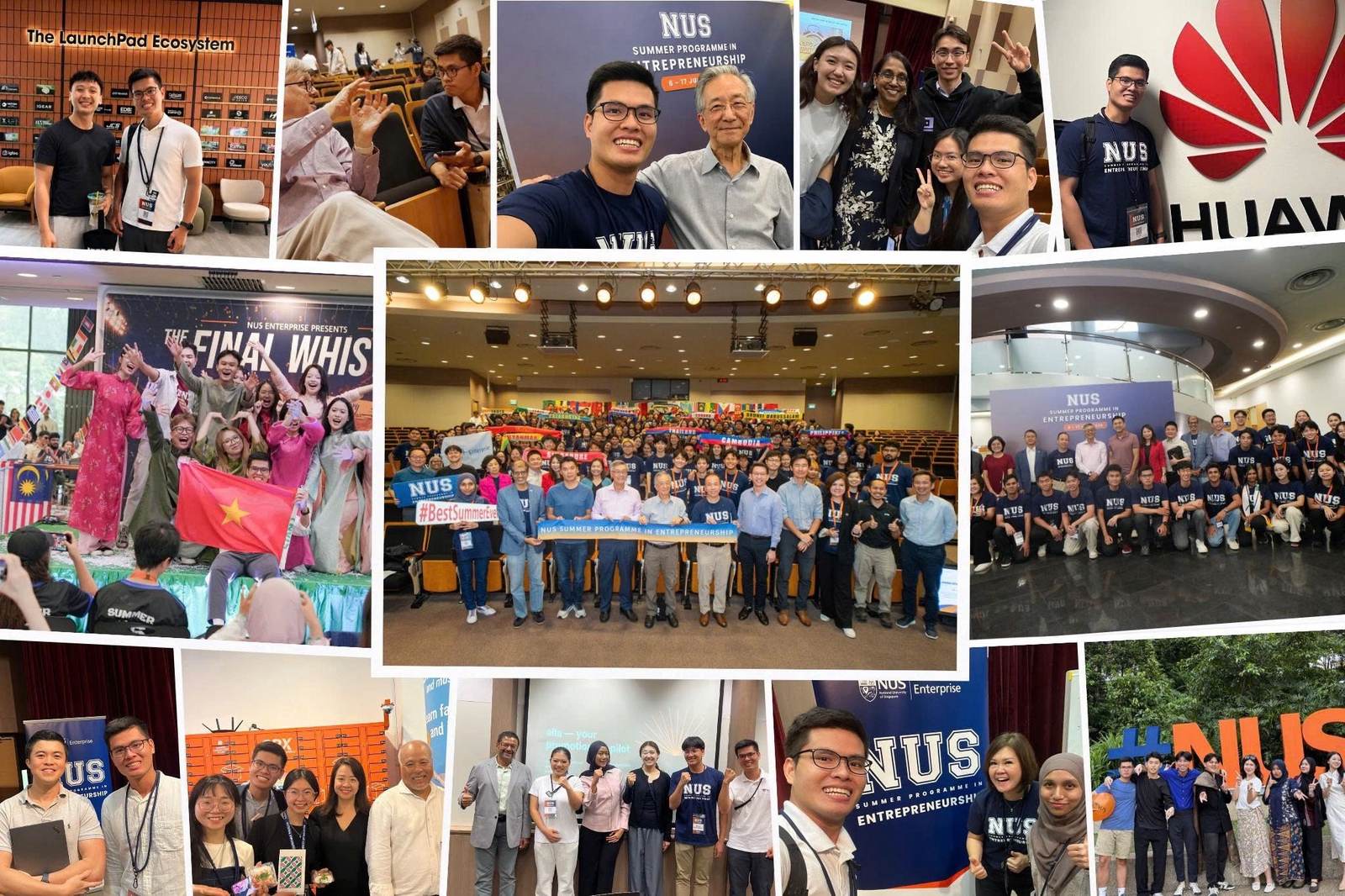
Our brief was one small part of a twelve-day programme. Students heard Philip Yeo on building talent, institutions, and whole industries, and Jeffrey Tiong on how one technical annoyance became PatSnap. Koh Seng Choon made the least romantic and most useful point of the week: passion is not the scarce input, and time, capital, health, and judgment all have to show up too. Method sessions with Laina Raveendran Greene of Angels of Impact and Tay Kae Fong of Binomial Consulting drilled customer jobs, pains, and gains, and the discipline of validating a problem before falling in love with a solution. Then the cohort went out into the city: to ACE for the view of Singapore’s startup ecosystem, to Grab, where Sriram Iyer explained why you cannot simply copy a product across Southeast Asia because culture, language, and local friction all get a vote, and to Huawei Singapore on the long-term obligations that come with commercial success.
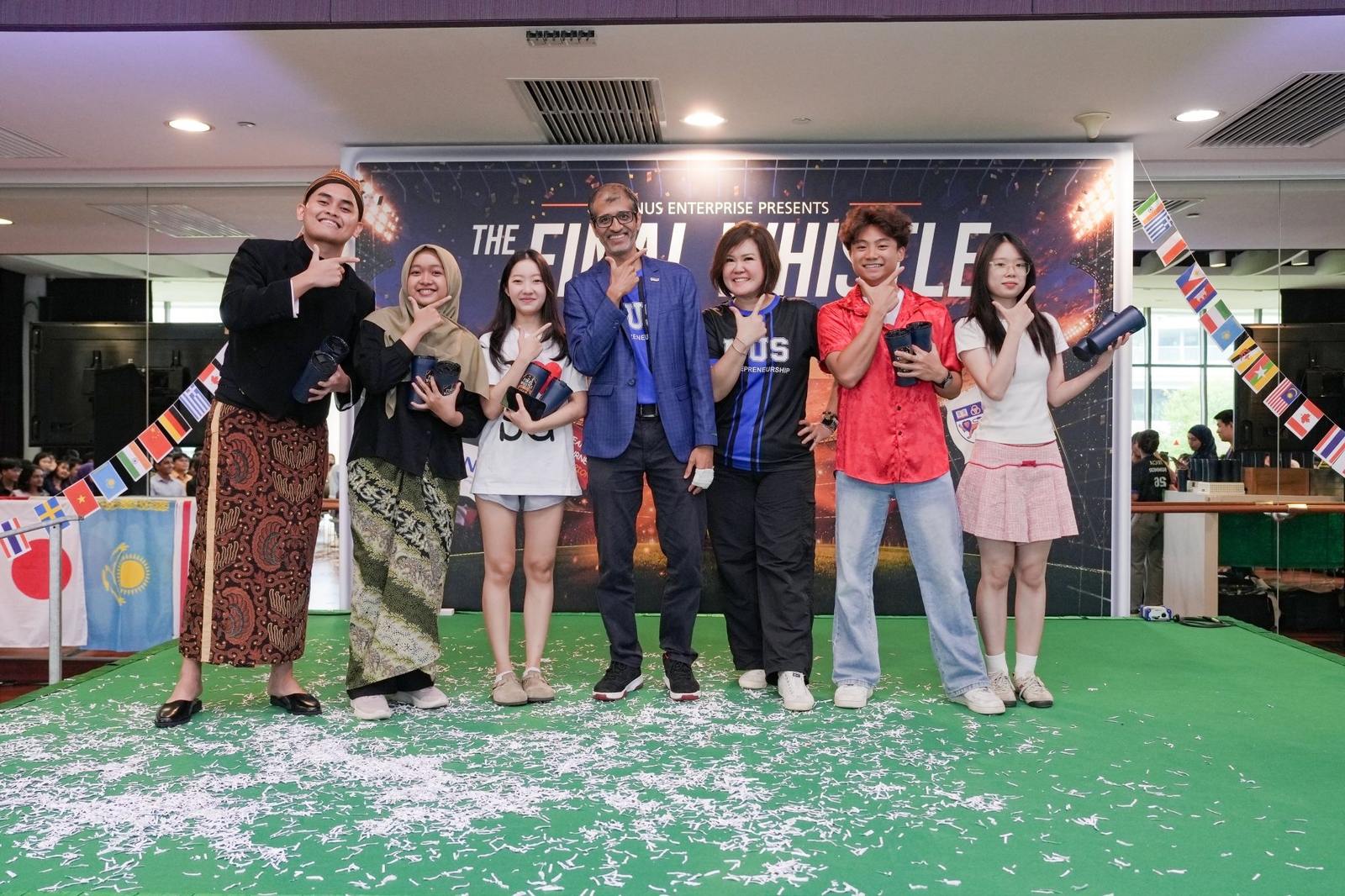
Behind the teams sat a mentor and judge corps drawn mostly from Singapore’s investment and operating community, with people from Vertex Ventures, Quest Ventures, iGlobe Partners, AppWorks, Ferryman Capital, Transfong Ventures, raiSE Investment, Elev8.vc, ShopBack, Grab, CDL, ACE, the Alibaba Innovation Alliance, and NUS Enterprise itself. It ended with Demo Day, and then The Final Whistle, where the awards were handed out.
Claire Cheong, Beverly Teoh, and Nabihah Z at NUS Enterprise ran the programme. Some participants came with support from the NUS ASEAN SPARK Fellowship and from their own universities, including Vietnam National University, Hanoi.
A brief handed to a weak programme produces nothing. This one got twelve days of customer discovery, a room full of working investors pushing back, and the pressure of a Demo Day stage, applied by students who actually live in the markets we were asking about. NUS Enterprise built that machine. We handed it a question.
Foundation support, in summary
- Wrote and contributed Problem Statement 9, “Accelerating AI Adoption for SMEs,” to NUSSP 2026, July 6–17, 2026.
- Provided the prize for the winning team: one coaching session with Chuck. No cash component.
- Problem Statement 9 was won by Team SMEily, one of ten winning teams across the programme’s briefs.
- No travel, no in-person teaching, no curriculum delivery. NUS Enterprise ran the programme end to end.
- Neither NUSSP participants nor the coaching session are counted toward Foundation student-reach figures.
- Participant accounts of the programme: Team SMEily and Team 6 on LinkedIn. NUS Enterprise’s own Demo Day summary lists all ten winning teams and the full mentor and judge corps.
Writing the brief took an afternoon. In exchange, several teams of students who live in the markets we were asking about spent twelve days investigating the question, with working investors picking their answers apart. We came away knowing things about SME AI adoption that we would not have learned by commissioning a study.
We look forward to deepening our collaboration with NUS Enterprise in the coming years.