Zhou & Eesley Family Foundation
About the Foundation · Founded 2021

Why this Foundation exists.

From the founders

Where this comes from.

We came from humble families on opposite sides of the world. Chuck grew up in a rural part of southeastern Ohio. Lijie grew up in China. Our parents and grandparents taught us the value of education and the value of hard work — mostly by living those values themselves.

We were lucky in the ways that mattered most: we were born into families that loved us and believed our lives could go somewhere. From there, things have gone better than either of us would have predicted, and we feel the responsibility that comes with that.

To whom much is given, much is expected.

But we also started this Foundation because we love the project of it — figuring out together, with our limited resources and talents, how to have the most impact we can in the places where impact is hardest to make. That work has been one of the most rewarding things in our lives.

— Lijie & Chuck

Lijie and Chuck started the Foundation because they kept noticing the same gap from two different angles.

Chuck spent years studying — and teaching — how entrepreneurship actually happens. His research at Stanford traces how the institutional environment around a person (the university they attended, the policies they live under, the networks they can reach) shapes whether their ideas turn into companies and careers. The pattern is consistent: the talent is everywhere; the access isn't.

Lijie spent years building products and teams in Silicon Valley and watching how much of what we call "tech literacy" gets passed along through proximity — a parent who codes, a high school with a robotics club, a summer internship someone's family arranged. The students without that proximity aren't behind because they're less capable. They're behind because the inputs never reached them.

The Foundation is their attempt to put inputs into places where they don't normally arrive.

What we fund

We focus on three things.

01

Computer science and AI education

In K–12 and university settings, particularly in places where the local school system can't easily attract or retain CS teachers.

02

Entrepreneurship training

For university students and early-stage founders in emerging markets and underserved U.S. communities.

03

Mission-related investments

In companies and funds whose work expands access to technical education, scientific research, or entrepreneurship in underserved communities.

We are deliberately not a generalist foundation. We don't fund everything we care about — we fund what we can stay close to.

Co-founders

The people behind the work.

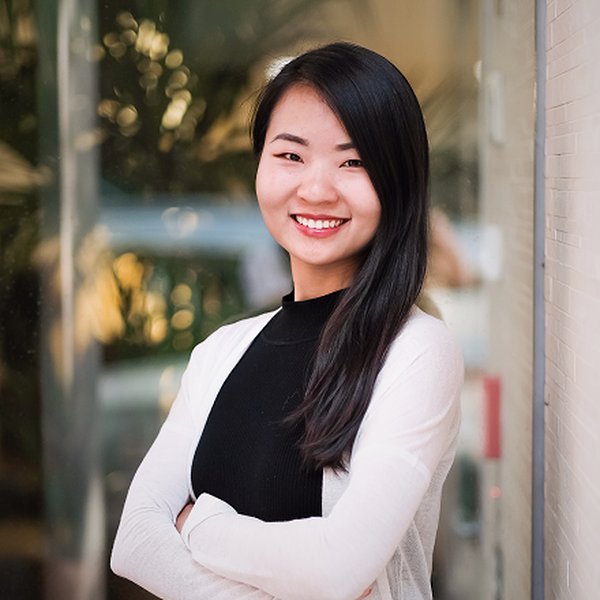
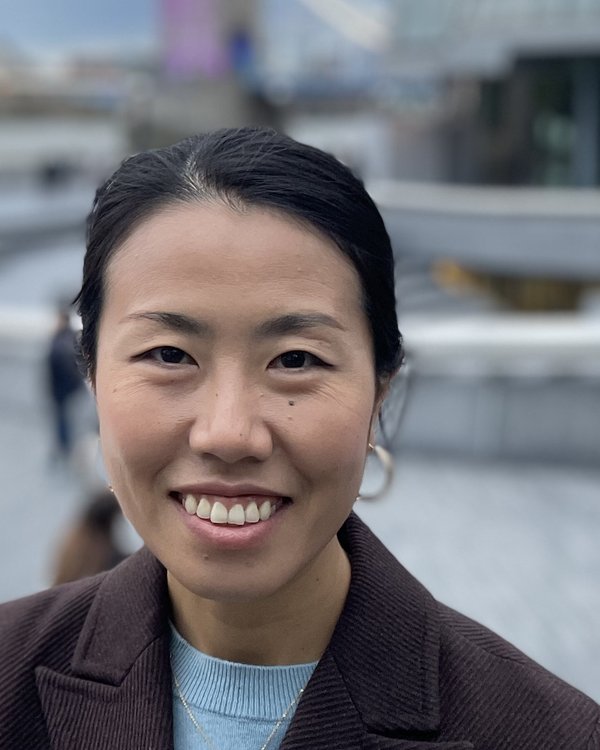
Lijie Zhou

Lijie Zhou

Co-Founder & CEO

Lijie leads the Foundation as Chief Executive Officer, including the Molokai school partnership and the Malaysia educator workshops. She is currently a Senior Platform Engineer at Inworld AI, where she works on GPU and AI infrastructure, and an active angel investor.

Lijie's path to Silicon Valley engineering ran through teaching and education policy first. She grew up in China and earned a Bachelor's in Chinese Language from Qingdao University, then came to the U.S. for a Master's in Linguistics from the University of Toledo. She joined Vassar College as Lecturer in Chinese immediately after completing her Toledo master's, then returned to China — where she co-founded an education startup, served as a program manager at China's Ministry of Education, and held a program manager role at TAL Education Group, one of China's largest education companies. The combination of national education policy, private-sector ed-tech at scale, and hands-on teacher-training-startup work gave her a particular vantage on the institutional access gap the Foundation now exists to address. She later moved back to the U.S. and pivoted into computer science at San Francisco State University, earning a second Master's there and seeding what became the Foundation's first university partnership. After SFSU she spent six and a half years as a Site Reliability Engineer at Gusto, with earlier security engineering work at Facebook and McAfee.

Outside her engineering work, Lijie has served on the leadership team of Women Who Code's Silicon Valley chapter for nearly a decade and mentors with Code2040 — commitments that long predate the Foundation and that shape how it thinks about access for women and underrepresented founders.

Her perspective on the Foundation comes from watching how technical literacy gets distributed — in the U.S. and in China, in elite-private classrooms and in rural ones — and a conviction that the same inputs can reach further if the partnerships are built carefully.
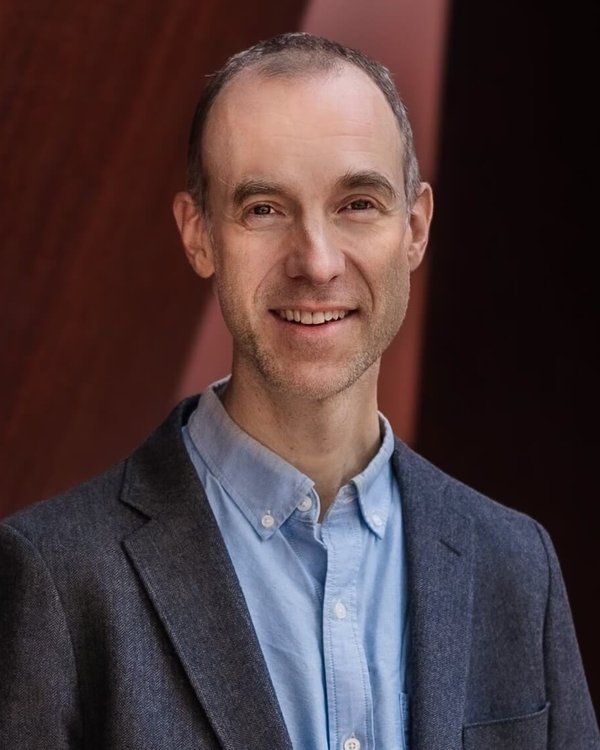
Chuck Eesley

Chuck Eesley

Co-Founder & Treasurer

Chuck is a full Professor of Management Science & Engineering at Stanford University, co-director for international entrepreneurship at the Stanford Technology Ventures Program (STVP), and the W.M. Keck Foundation Faculty Scholar. His research examines how institutional environments — policy, universities, capital — shape entrepreneurship and technology commercialization, and has been published in Nature (on the algorithmic financing of online misinformation), the Strategic Management Journal, and Organization Science.

He serves on the steering committee of the Stanford King Center on Global Development, which supports the Foundation's refugee entrepreneurship research in Uganda. A six-year Stanford KATALYST research collaboration with KBANK and AIS in Thailand similarly informs the Foundation's thinking on entrepreneurship in emerging markets. He co-founded NovoEd (acquired by Devonshire Investors / Fidelity), serves as an independent non-executive director at Vobile Group (HKEX: 3738), and has taught entrepreneurship to more than 200,000 students across six continents. He has advised the United Nations World Food Programme (engagement managed by a Big Four advisory firm) on the evaluation and benchmarking of accelerator programs in fragile and emerging-market contexts. He holds a PhD from MIT Sloan and a BS in neuroscience from Duke.

Advisory Board

The people who help us think.

The Foundation's Advisory Board brings together expertise in AI research, equitable venture capital, and the institutional study of entrepreneurship. They help us decide what's worth funding and how to evaluate it.

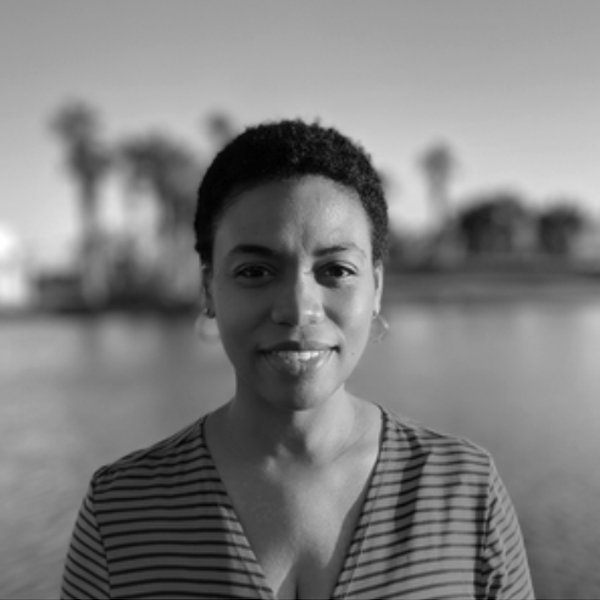
Sharon Li

Sharon Li, Ph.D.

Associate Professor, Computer Sciences, University of Wisconsin–Madison

Leading researcher in AI, machine learning, and multi-modal systems. Her work spans AI reliability, preference learning, and responsible AI deployment for real-world applications.

Hadiyah Mujhid

Hadiyah Mujhid

CEO & Founder, HBCUvc | Echoing Green Fellow | Author

A pioneer in equitable venture capital and inclusive entrepreneurship. Co-author of Black Founders at Work, with two decades of experience bridging technology, investment, and social impact.

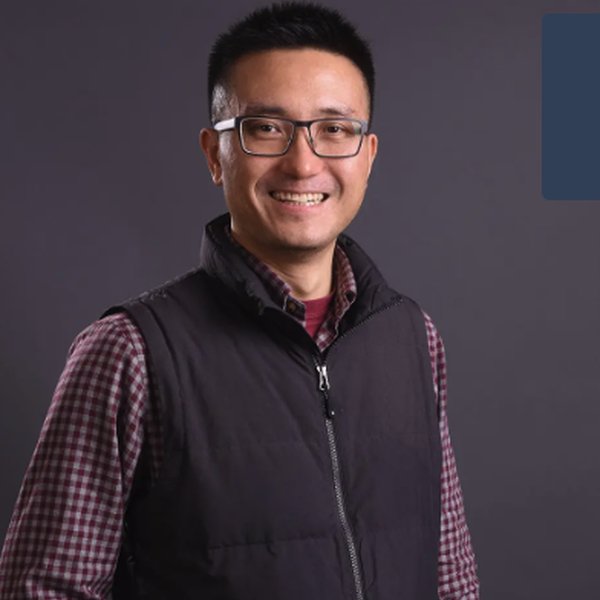
Yanbo Wang

Yanbo Wang, Ph.D.

Associate Professor, HKU Business School | Associate Director, Centre for Innovation and Entrepreneurship

An expert in technology-based entrepreneurship and innovation policy. His research on the institutional drivers of startup outcomes appears in Management Science, Strategic Management Journal, and other top journals.

Governance

How we govern ourselves.

The Foundation is a private operating foundation organized in California and recognized as a 501(c)(3) tax-exempt organization. We adopted formal investment and conflict-of-interest policies in 2021 and review them annually. Both are published in full below.

The Foundation's Form 990-PF is filed annually with the IRS and made publicly available through standard nonprofit data services. Detailed asset allocation and portfolio information is published on the Impact page.

How we make decisions

Slowly, and with people we know.

We meet with potential partners. We visit. We fund small first and grow the relationship if the work is real. We don't run an open RFP because we can't responsibly evaluate a high volume of applications — but we read every email that comes through our contact form, and we follow up when there's a fit.

If you're not sure whether your work fits, send us a paragraph anyway.