Malaysia
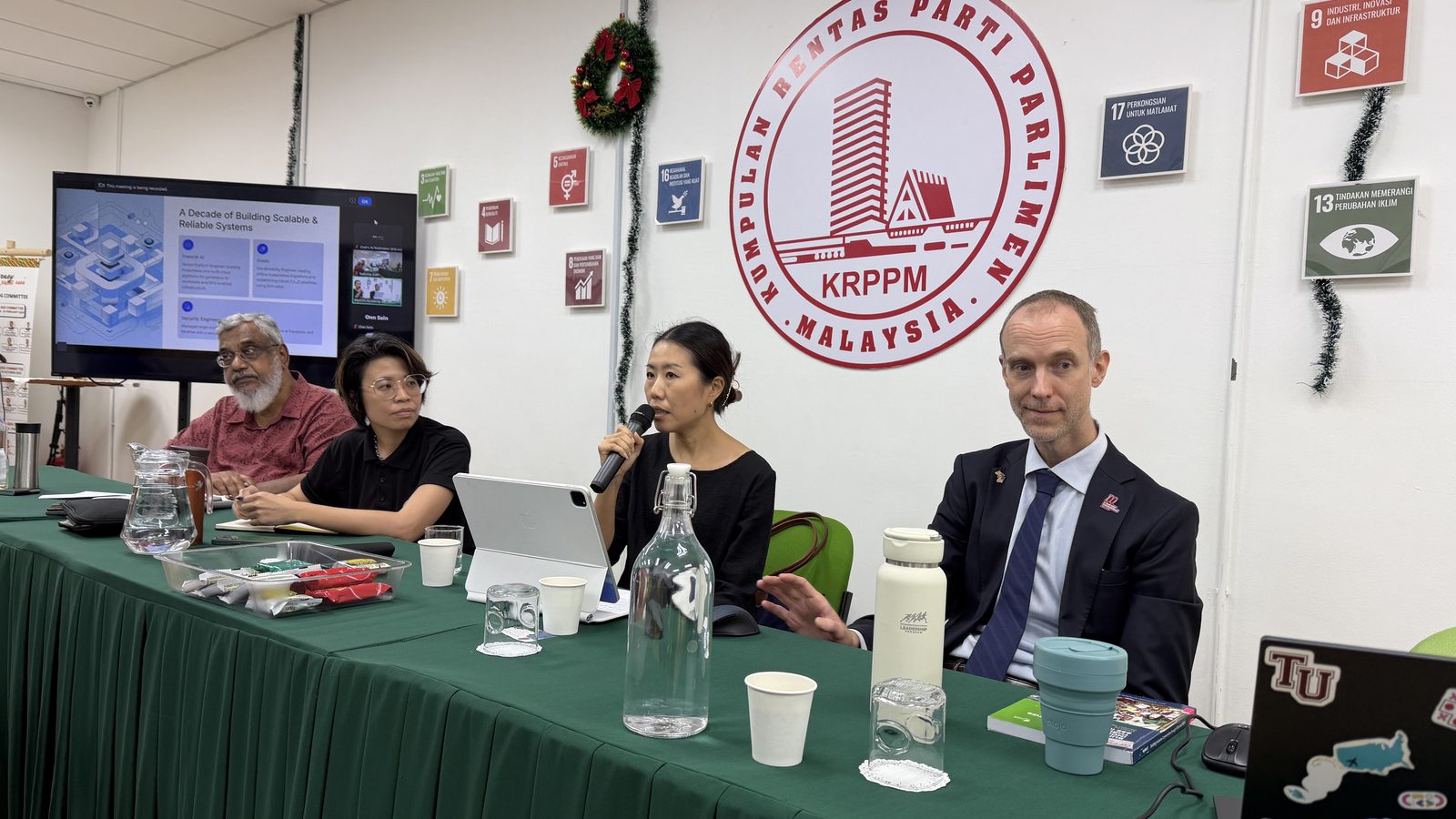
AI literacy and design thinking workshops for educators and students in partnership with the Penang Science Cluster, leading Malaysian universities, the U.S. Embassy in Kuala Lumpur, and the All-Party Parliamentary Group on the SDGs. The 2025 Penang program trained ~25 teachers reaching ~2,500 students. Project ASPIRAS AI, Lijie's 4-month cohort program helping 15 Malaysian non-profits move beyond basic chatbot usage to deep operational AI integration, is underway with two of four modules delivered.
Malaysia is one of the Foundation’s most active geographies, with programming spanning Penang and Kuala Lumpur and partners across the educational, governmental, and diplomatic ecosystem.
In Penang, our partnership with the Penang Science Cluster runs a teacher-training and student career-discovery program. In December 2025, roughly 25 teachers were trained directly; across the cohort the curriculum reached on the order of 2,500 students, a multiplier of roughly 100 students per teacher trained. From early survey responses (six teachers, eleven students), every responding teacher adopted AI tools or design thinking techniques in their classrooms, every responding teacher reported saving one to five hours per week through AI workflow integration, and 73% of surveyed students reported discovering a career path they had not seriously considered before. Teachers rated the program 8.7 out of 10 on average for “would you recommend a colleague”; students rated it 4.6 out of 5.
The work culminated on December 30, 2025 at the American Tech Corner (ATC) @ PSC. The morning was a Stanford-design-thinking workshop focused on augmenting PSC’s own internal workflows; the afternoon split into an AI-assisted career-exploration clinic with 15 students and an AI masterclass for PSC’s teachers and staff.
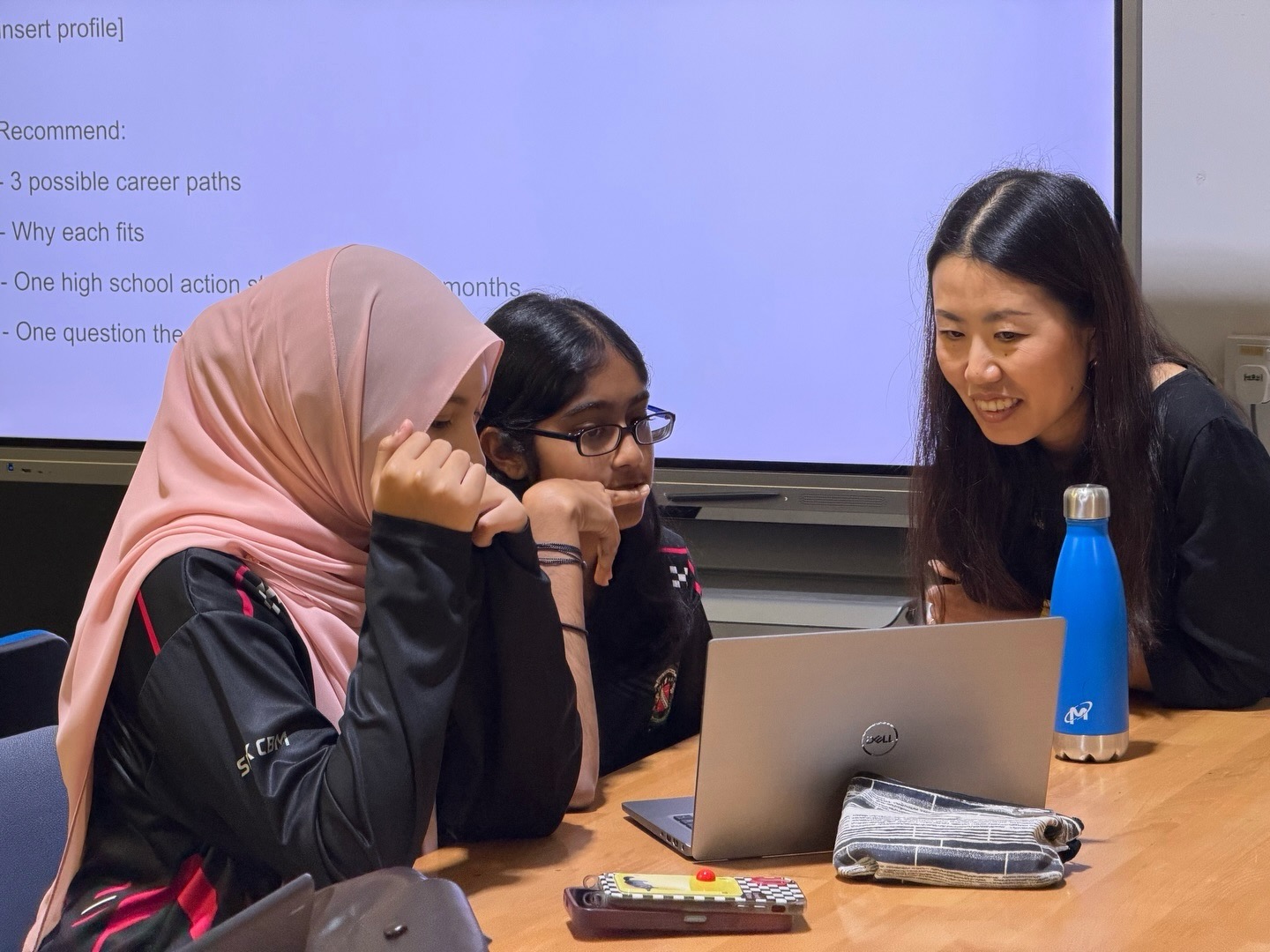
PSC documented the day on Facebook and LinkedIn, thanking the Foundation for “equipping our community with the hands-on skills and technical confidence to solve future challenges.”
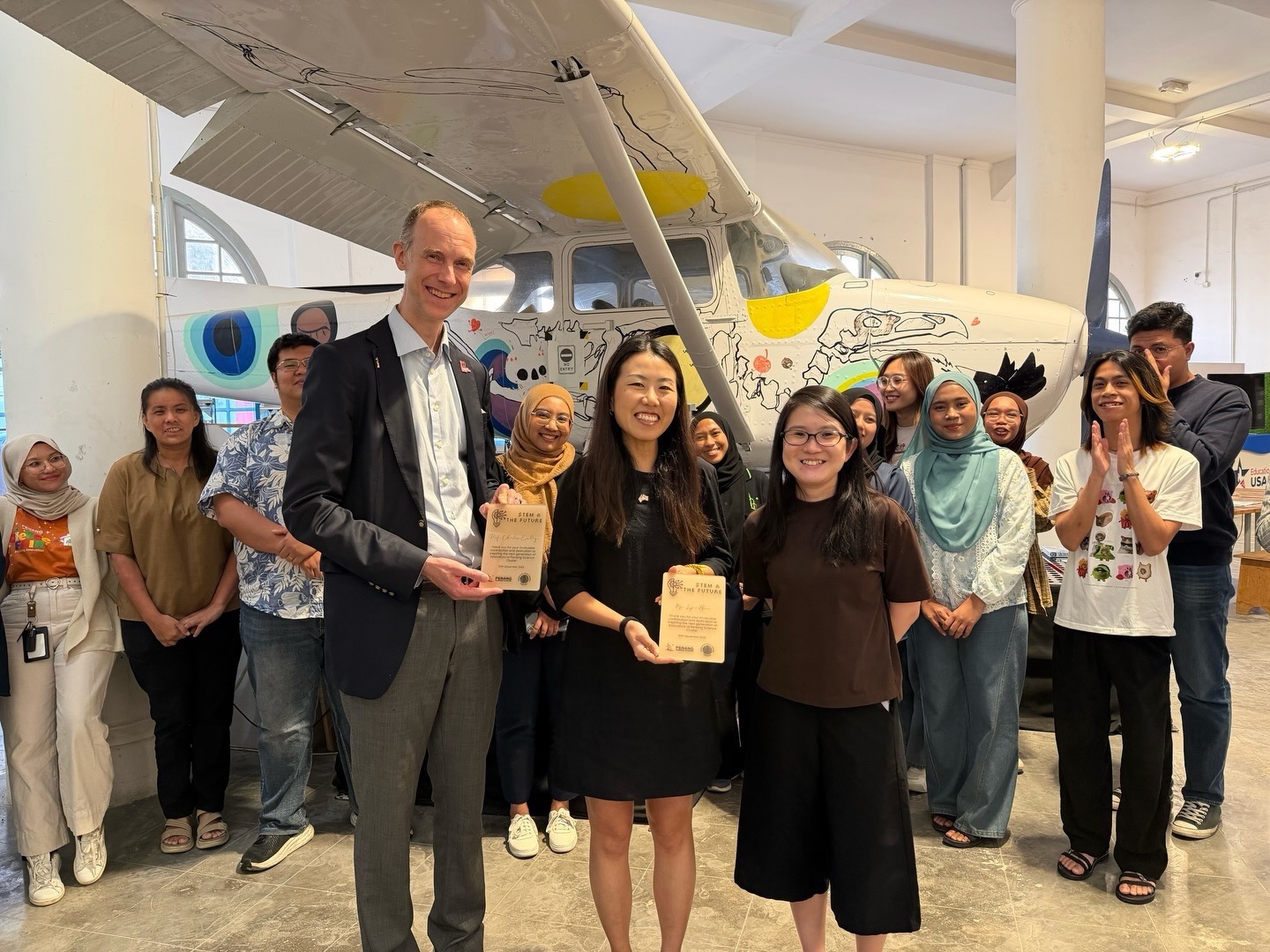
In Kuala Lumpur, the Foundation has worked with Universiti Teknologi Malaysia (UTM), the All-Party Parliamentary Group Malaysia on the SDGs (APPGM-SDG), and the U.S. Embassy on a series of talks, workshops, and policy engagements connecting the Foundation’s work to Malaysian education and entrepreneurship policy.
Project ASPIRAS AI, AI transformation for Malaysian non-profits (July–October 2026)
Project ASPIRAS AI is a four-month cohort-based AI transformation program for 15 selected Malaysian non-profits. The program is led by Foundation co-founder Lijie Zhou, in her professional capacity as a Silicon Valley platform engineer (Facebook, McAfee, Gusto, Inworld AI, currently Forward Deployed Engineer at Reducto AI) and as an early adopter of AI tooling and multi-agent workflow automation, and is curated by MySDG Academy, with support from APPGM-SDG as part of the Mainstreaming the 3rd Sector for Social Economy initiative under Malaysia’s 13th Malaysia Plan (RMK 13).
The program’s premise is that most non-profits using AI today are stuck at the level of basic chatbot prompts, getting marginally faster at copywriting, not fundamentally more effective as organizations. ASPIRAS AI is designed to move participating non-profits past that ceiling into deep operational AI integration: workflow automation, fundraising and funder-tailoring at scale, communications, productivity, and the responsible-use guardrails (PDPA compliance, ethics) that make any of it sustainable.
Curriculum. Four modules delivered across the four-month cohort:
- AI Foundations & Responsible Use, including PDPA compliance and ethical-use framing for the Malaysian context.
- Prompt Engineering for Impact, moving past one-shot prompts into structured, repeatable patterns.
- Operational AI & Productivity, integrating AI into existing organizational workflows rather than bolting it on.
- Communications & Fundraising, tailoring funder outreach, donor communications, and impact reporting using AI tooling.
Between modules, participants work on practical assignments drawn from their own organizational work, supported by implementation sprint sessions over Zoom. The cohort runs from a kickoff in July 2026 through implementation sprints in August and September, with a Result Showcase in October 2026.
Progress: two of four modules delivered. As of August 2026 the cohort has completed the first two sessions, on AI foundations and responsible use, and on prompt engineering. Both sessions held over thirty participants for their full length, drawn from organizations including WWF-Malaysia, GMI International, HISTEAM, YWCA Kuala Lumpur, Pertubuhan Hijau Lestari Sabah, the Malaysian CSO-SDG Alliance, KoWENA, FOMCA, and inspiraComm. The remaining two modules, on operational AI and productivity and on communications and fundraising, run ahead of the October showcase.
Two pathways to participate. A paid pathway at RM1,999 per organization, and a fully sponsored seat awarded through a panel selection process, designed so cost is not the limiting factor for organizations that would most benefit. All participants gain access to the growing AspirasAI Network of AI-ready Malaysian non-profit leaders and organizations. Program details and registration are handled through MySDG Academy’s training program page.
Why this program. The Foundation’s earlier Penang work showed how much leverage there is in training teachers rather than students directly. ASPIRAS AI is the same logic applied to the non-profit sector itself: a small cohort of organizations that learn to operate more effectively with AI will, in turn, deliver more for the communities they serve. Fifteen well-trained Malaysian non-profits going through this material together is the kind of seed cohort that can change a sector.
Where this goes next: scaling the trainers, and measuring what works
The aim after the pilot cohort is to scale the model by scaling the trainers. Rather than run every program directly, Lijie plans to train local educators and program leaders to deliver their own versions of the workshop — the same train-the-trainer logic that gave the Penang work its roughly 100-to-1 reach, formalized into a repeatable playbook that others can carry into their own schools, organizations, and communities.
Paired with that is a shared data template: a common, lightweight way for every partner to record participation, tool adoption, time saved, and student and organizational outcomes. Results from independently-run programs then roll up into a single evidence base the Foundation can analyze across cohorts and geographies. Consistent measurement is what turns a set of successful one-off sessions into a model with proof behind it — and it keeps the Foundation’s evidence-first commitment intact as the work spreads beyond any one room.
What this looks like in practice
- Teacher-training and student career-discovery programs at the Penang Science Cluster
- Talks at Universiti Teknologi Malaysia and the Malaysian Parliament (APPGM-SDG)
- Programming at the U.S. Embassy in Kuala Lumpur
- Curriculum co-development with local educators
Why it matters
Malaysia sits at a productive intersection of Southeast Asian innovation networks. The Foundation’s bet is that putting AI and entrepreneurship inputs into the hands of teachers and students who don’t yet have systematic access to them, and who in turn reach hundreds more, produces compounding impact for years. The Penang program is the clearest evidence we have that the multiplier model works.
The thinking behind this work
Short clip from Chuck on the framing underneath the Penang work, that as AI takes over more of the technical execution, what compounds for the next generation is artistic intelligence: creativity, judgment, and the ability to use technology to make something of real value. The Penang teachers and the 2,500 students they reach are what the framing looks like in practice at scale.