
Uganda
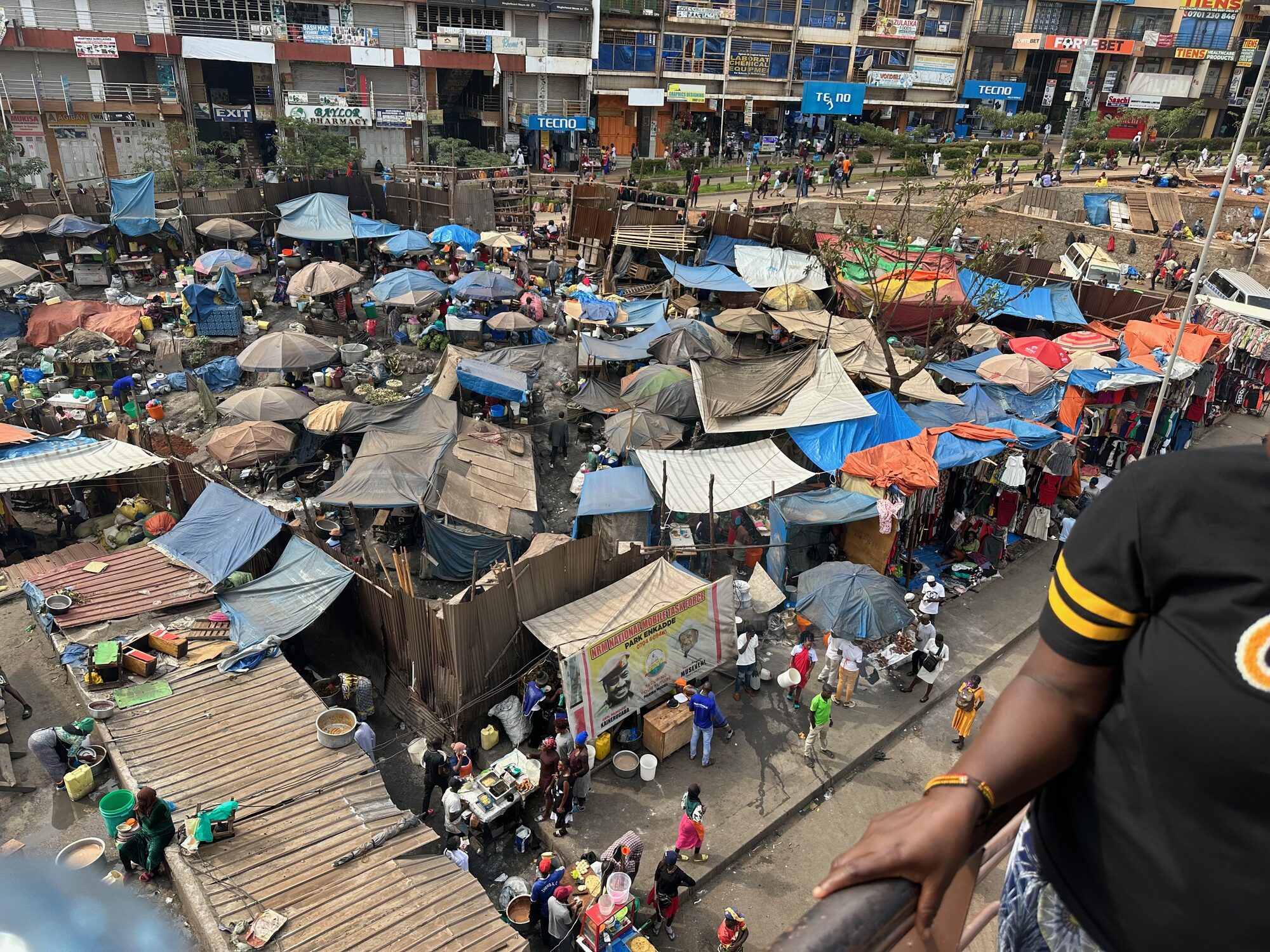
Funding microloans for refugee entrepreneurs in Uganda alongside research on what makes entrepreneurship training work for displaced founders. Delivered in partnership with Challenges Uganda (microlending pilot and mentorship) and Makerere University Business School (curriculum and research).
Uganda hosts roughly 1.7 million refugees, one of the most progressive refugee integration policies in the world. The Foundation’s Uganda program supports refugee entrepreneurs at the point where good policy meets the practical limits of capital, training, and market access. Many refugees end up in saturated low-margin ventures because that is what is reachable without collateral, credit history, or a network. Our work, carried out in partnership with Challenges Uganda and Makerere University Business School (MUBS), is built around the conviction that the right combination of training, mentorship, and small amounts of capital can change which businesses are reachable in the first place.
Status as of mid-2026. Active in-country programming and the planned randomized controlled trial scale-up are temporarily paused in response to the Ebola outbreak in Uganda and the Democratic Republic of Congo. We anticipate resuming with our local partners at Challenges Uganda and Makerere University Business School once the public-health situation allows safe in-country engagement. The 500+ alumni cohort and the ventures listed below remain active in their communities.
The program pairs a 10-week entrepreneurship curriculum (developed with MUBS) with mentorship from both local and refugee mentors, and microloans of $500–$1,000 to top-performing teams, disbursed through Challenges Uganda, our pilot microlending partner. Outbox Uganda helps connect participants to the local mentor network. The Foundation funds the loan capital and supports the research that tells us what is actually working. The loan capital is structured as a program-related investment (PRI) to Challenges Uganda, zero-interest, flexible terms, so that loan repayments revolve back into capital for the next cohort rather than returning to the Foundation as income.
What this looks like in practice
- Microloan capital for top-performing refugee entrepreneurs, disbursed through Challenges Uganda
- A 10-week entrepreneurship curriculum co-developed and co-taught with Makerere University Business School
- A mentor network combining local Ugandan mentors and refugee mentors, with help from Outbox Uganda
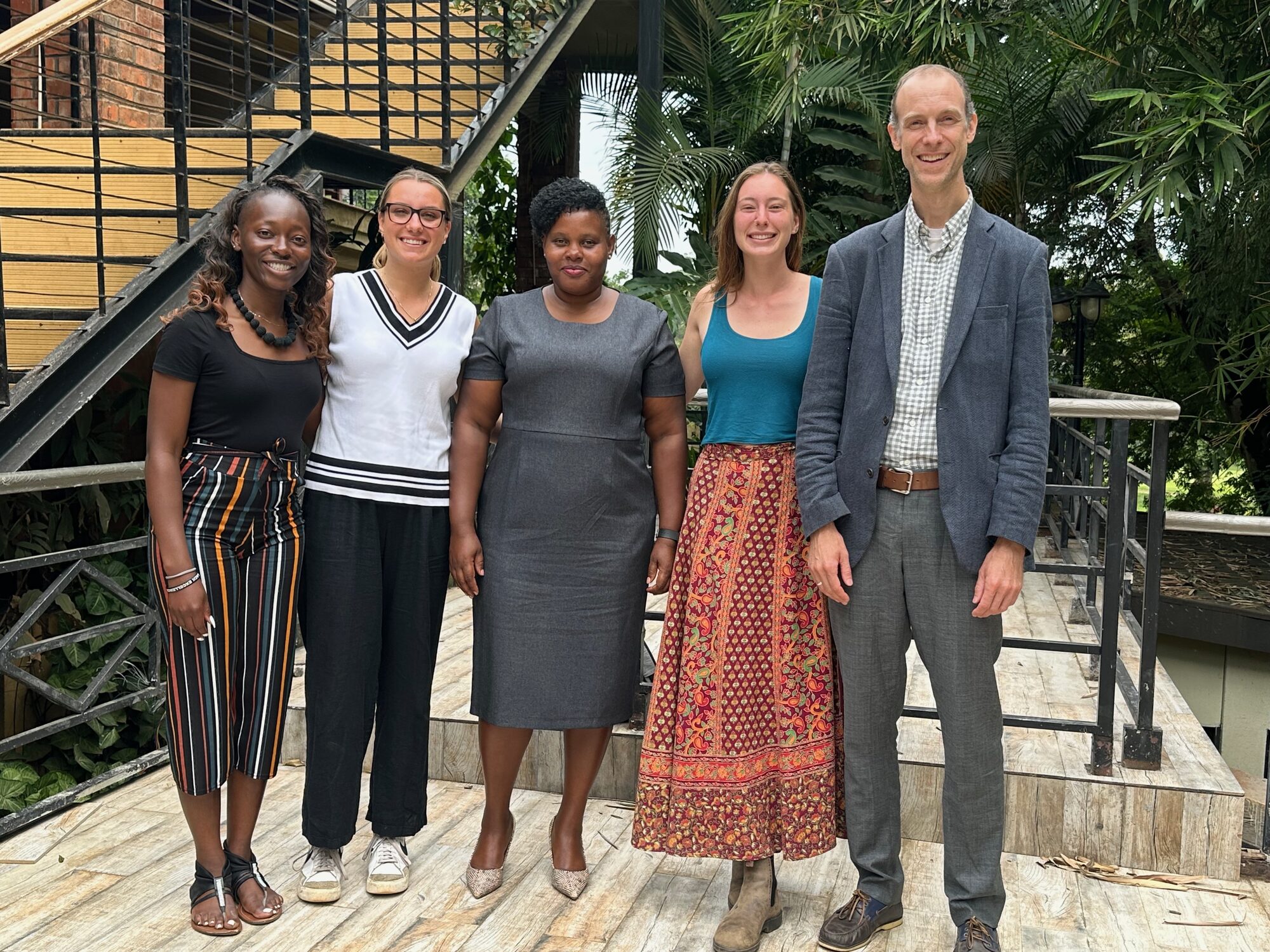
- Field research with Stanford undergraduates and PhD students, anchored by Zahra Hejrati (Stanford PhD 2025, now a Research Fellow at the AMENA Center for Entrepreneurship and Development), whose dissertation work centered on the impact of digital technologies on entrepreneurial venture formation, with Abisola Kusimo (Stanford Mechanical Engineering PhD alum) guiding the team’s qualitative interview methods in Kampala, documenting what works and for whom, including published work on the tradeoff between social proximity and local integration in refugee entrepreneurship, generously funded by the King Center for Global Development at Stanford
Theory of change
The model rests on three pillars run together rather than separately, because the evidence from earlier refugee-livelihood programs is that any one of them in isolation tops out fast:
- Entrepreneurship training and mentorship, a tailored curriculum addressing the specific challenges refugee entrepreneurs face, paired with mentorship from both local Ugandan business leaders and fellow refugees who have navigated the same constraints.
- Microfinance access and savings groups, refugee-friendly financial products designed around group-based lending and savings incentives, building on the architecture pioneered by BRAC Uganda’s graduation work.
- Market integration and business networks, connections from refugee entrepreneurs into local Ugandan markets, both to overcome stereotypes that limit cross-community trade and to surface the kind of customer demand that makes the businesses durable.
Most refugee entrepreneurship programs offer one or two of these. The Foundation’s bet is that running all three together, in close partnership with operators on the ground, produces compounding effects that any single intervention cannot.
Numbers so far
- 500+ refugee entrepreneurs trained through the program to date
- 65% women-led businesses in our initial cohorts
- 250 refugees in the 8-week training cohort run in 2024
- Microloans of $500–$1,000 per team disbursed via Challenges Uganda to top performers
- Active programming across Kampala and Uganda’s refugee settlements (Nakivale and others)
For context, Uganda hosts roughly 1.7 million refugees, the largest refugee population in Africa. Foundation modeling suggests that with the right combination of training, mentorship, and capital, Uganda’s refugee entrepreneurs could create on the order of 150,000 jobs and contribute over $200 million in annual GDP. We treat that figure as a target to organize against, not an outcome we’ve achieved.
What we’ve learned so far
Randomized controlled trials run across our pilots in Ethiopia and Uganda over the past several summers found that mentorship from refugee mentors significantly improves the quality of business ideas, and that the effect is particularly strong for female entrepreneurs, who, when paired with refugee mentors, pursue more novel and less saturated business ideas than peers without that mentorship. The mechanism appears to be confidence: culturally relatable role models who have navigated the same constraints make it easier for women to commit to ideas outside the saturated low-margin defaults.
Graduates of the program have launched ventures including Voice for Refugees (a media training center now with 100+ active members), Aspire Digital Hub (digital skills training and event management), and Afixyz (an organic food B2B platform whose founder has been invited to share their work with UN agencies). Other alumni businesses include an organic beauty products company now operating across Kenya, Tanzania, and Uganda, and a digital platform connecting landlords with refugees seeking housing.
Sessions and guest speakers
Alongside the core curriculum, the Foundation periodically convenes guest speakers, entrepreneurs whose own journeys carry useful lessons for refugee founders working through similar transitions.
Vasyl Dub, Staying motivated on the founder’s journey (November 2024)
Serial entrepreneur Vasyl Dub joined the Uganda cohort over Zoom for a 40-minute session on how to stay motivated through the long arc of building a business. Vasyl’s own path, starting a company in Ukraine, navigating personal and political upheaval, and eventually building in Silicon Valley, resonated with founders facing comparable transitions.
Chapters in the talk:
- 00:00, Chuck Eesley introduces Vasyl Dub
- 01:46, Agenda
- 04:25, About Vasyl
- 06:19, Student self-introductions
- 09:56, How does motivation work?
- 12:12, Motivation and neurology
- 13:34, Goal setting
- 14:26, Dopamine diagram & practical psychology
- 16:05, Spirituality and motivational stories
- 20:41, How to stay motivated?
- 28:44, Find your own ikigai
- 30:43, Q&A
Where this fits in the sector
We are not running this work in isolation. The integrated training-plus-finance-plus-market-access model the Foundation is piloting in Uganda is in dialogue with the broader global livelihoods sector, particularly BRAC Uganda’s graduation program (the foundational evidence base for combining cash, training, and mentorship for ultra-poor populations), the DREAMS project from Mercy Corps and Village Enterprise (which has been refining how refugee-targeted business support links to local market demand), and Re:Build, run by the IKEA Foundation and the International Rescue Committee (which has established what the funder side of long-term refugee economic inclusion looks like at scale). Our contribution is the rigorous research lens, the RCT methodology, the comparative work across Ethiopia and Uganda, and the focus on which combination of interventions actually moves outcomes for women, that the sector still needs more of.
Why it matters
Uganda’s policy gives refugees the legal right to work, move, and start businesses, but the rest of the system that founders elsewhere take for granted (small loans, working capital, mentor networks, customer access beyond their immediate community) is often missing. The Foundation’s bet is that putting that missing infrastructure in place, in partnership with Ugandan institutions that will still be here when we are not, lets refugee entrepreneurs build the kinds of businesses that produce dignity and long-term stability rather than just survival. The work also informs research at Stanford and MUBS that we hope will help other refugee-hosting countries make smarter bets with their own programs.
Research funding for the Uganda work was provided by the King Center for Global Development at Stanford. The program was developed during Chuck Eesley’s Stanford Impact Labs Faculty Design Fellowship.