
Paris
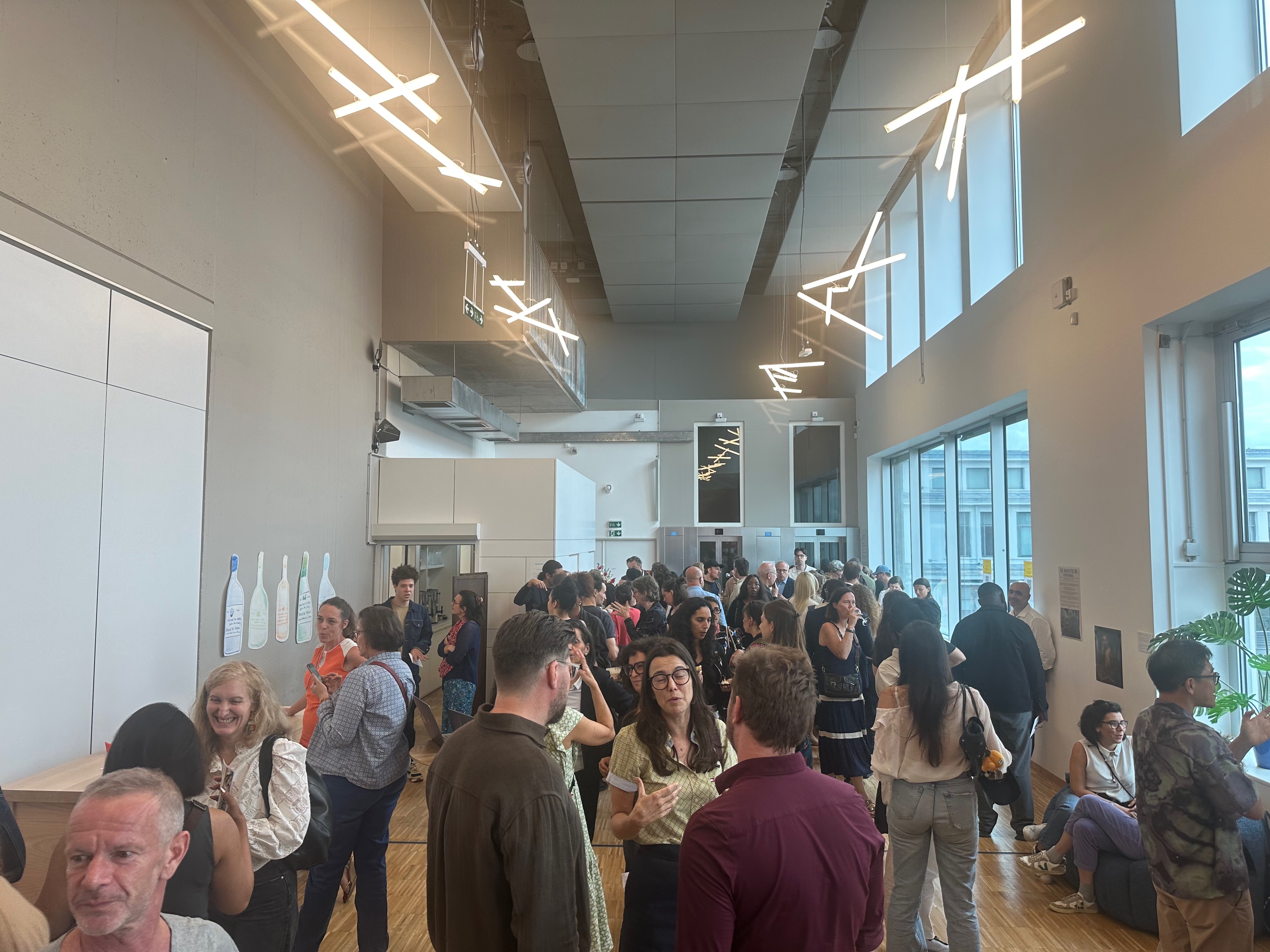
In July 2025, the Foundation supported the Improbable Chair at ESCP Business School and its partner L'Ascenseur, Prof. Sylvain Bureau's art-thinking framework applied to non-profit leaders and to organizations working on equal opportunity in France. Chuck taught pro bono across two days of seminars and joined the closing panel at the Musée Postal.
Why Paris belongs on this list
Most of the Foundation’s program work happens in places where access to entrepreneurship and CS education is structurally scarce, Molokai, Tanzania, Uganda, Vietnam, Penang, the refugee settlements outside Kampala. Paris is not that. So why is it here?
The Foundation’s mission is computer-science and entrepreneurship education for communities that mainstream programs overlook, with particular focus on women, underrepresented founders, and people working at the edges of opportunity. That mission is mostly delivered through programs in emerging economies, where the structural gap is largest. But the same gap exists in France, in the banlieues, among first-generation students from immigrant backgrounds, and across the regions of the country where the Grandes Écoles pipeline doesn’t reach. The Paris engagement was anchored on that side of the work, not the wealthy-Europe side. The Foundation’s contribution went through L’Ascenseur, one of France’s leading equal-opportunity organizations, which pulls together over a hundred member non-profits working with young people from underserved French communities. The Improbable Equality seminar on July 23 was explicitly designed for L’Ascenseur’s network and for students from deprived backgrounds; that’s the seminar the Foundation primarily supported. The Improbable AI & AI seminar on July 22 was the lead-in and the framework-builder.
In short: Paris belongs on this list because of who the work served, not where it happened.
Twenty years of working together
Chuck and Sylvain Bureau have been friends since meeting at Duke in 2004. The Paris engagement in 2025 was the latest chapter in a collaboration that started long before either of them was running a foundation, a chair, or anything else with letterhead.
In 2018, after watching what Sylvain was building with the Improbable workshop, Chuck traveled to Paris to learn the method from him directly. That July, the two co-taught an Improbable workshop together through Stanford executive education, Chuck’s first time running the format alongside its inventor in front of a Stanford audience. In the years since, the Foundation and Chuck have hosted Sylvain twice at the Stanford d.school for weekend workshops, bringing the method to Stanford faculty, students, and visiting executives. The Tokyo edition of the Improbable workshop, run in parallel during that arc, was sponsored by Mistletoe, the venture firm and ecosystem founded by Taizo Son.
The collaboration has also produced shared intellectual artifacts. AI vs. AI, Artificial Intelligence vs. Artistic Intelligence, the framing the Foundation now uses across its teaching on creativity in the age of generative AI, began as a collaboration with Sylvain for a Paris talk and has since traveled to Molokai, Penang, and beyond.
So when the Paris engagement happened in 2025, it was less a new chapter than the continuation of a working relationship two decades in.
How the 2025 program came together
The Foundation’s 2025 Paris work runs through Prof. Sylvain Bureau, Scientific Director of the Improbable Chair by Galeries Lafayette at ESCP Business School, and the developer of the Art Thinking framework that has shaped how mission-driven leaders generate ideas that purely analytical methods miss.
In July 2025, Sylvain ran two parallel Improbable seminars: an Improbable AI & AI seminar on July 22 for executives and visiting Stanford students, and an Improbable Equality seminar on July 23 in partnership with L’Ascenseur, an organization working on equal opportunity in France. The two days closed with an exhibition of fifteen Improbable artworks, focused on equal opportunity in France, and a panel discussion at the top of the Musée Postal, with a view of the Eiffel Tower.
What the Foundation contributed
Chuck taught and mentored across both seminars pro bono. The Foundation was not paid for the work; ESCP covered hotel costs in lieu of fees. The session covered the Foundation’s social-impact work, the operating-foundation model, and why art thinking is becoming more (not less) important to teach in the age of AI.
The closing panel, Lost in Translation: Between Artistic and Artificial Intelligence
Chuck joined the closing panel at the Musée Postal alongside:
- Corine Waroquiers, Advisor, SGPI (French Prime Minister’s Office)
- Thomas Friedberger, CEO, Tikehau Investment Management
- Jean-Michel Pailhon, entrepreneur (ex-Ledger, Capital Grail)
- Ellen Oh, Director of Interdisciplinary Programs, Stanford Arts
- Vaughn Tan, Professor of Strategy, UCL Singapore
- Amy Whitaker, Associate Professor, NYU
- Seamus Yu Harte, Head of Learning Experience Design, Stanford d.school
The panel framed the evolving relationship between human and artificial intelligence, what it means to complement, rather than compete with, machines, through the Paul Valéry observation that opens Sylvain’s exhibition catalog: that the easier our tools become, the more deliberately we have to choose to keep using the parts of our minds the tools would otherwise replace.
Why this work matters
The Foundation’s mission centers on entrepreneurship and computer science education for communities mainstream programs overlook. The Improbable Equality seminar, explicitly designed for organizations and students working on equal opportunity in France, aligned cleanly with that mission, and the L’Ascenseur partnership opened a window into how the equal-opportunity question is being engaged in a different national context. Sylvain’s Art Thinking framework, applied to non-profit leaders, is one of the more thoughtful answers we have seen to the question of how creative leadership develops in mission-driven organizations.
The Foundation’s involvement so far has been a single-engagement contribution; the relationship with the Improbable Chair and L’Ascenseur remains open to deepening.